What is an American woman hero?
American women heroes are American women who, through their actions, words, art, or service in government, have made a significant positive impact on society.
Sections
American Women Heroes
There are countless women who fit our description of an American woman hero, and AWHO works to make sure they are celebrated. Read more to learn about some women who exemplify what it means to an American woman hero.


Michelle Obama (1964 – Present)
A graduate of Harvard Law School and accomplished lawyer, Michelle Obama became the first African-American First Lady, the counterpart of America’s first African-American president. Her campaigns and As First Lady, she focused on public health, veterans, and education. She’s written four books, and done countless media appearances that have cemented her as an inspirational figure.

Emma Goldman (1869 – 1940)
Emma Goldman was born in 19th century Russia, where she was affected daily by political suppression and fascism. As a teenager, she embraced the ideals of the Russian revolution, the most important of which was removing the Czarist regime. In 1885, Goldman emigrated to the US, where she was disappointed in the persecution of labor activists. She later joined the anarchist movement, and promoted many radical ideas related to labor, feminism, sexual liberty, and socialism. At the height of Red Scare, she was imprisoned for opposing the draft and eventually deported back to Soviet Russia. Here, she continued to write about the conditions of fascism she was experiencing, but radicals in New York were not receptive to her ideas. Still, Goldman spent the rest of her life fighting against oppressive regimes and ideas.

Eleanor Roosevelt (1884 – 1962)
In 1933, Eleanor Roosevelt became the first First Lady to hold her own press conference. In an effort to give women more space, she only allowed female reporters to attend. She was an advocate for the rights of minorities and the poor, serving as chair of the Human Rights Commission even after the death of her husband. She became a prolific writer and lecturer, mainly focusing on humanitarian efforts.

Harriet Tubman (1822 – 1913)
After being born into slavery and becoming permanently disabled because of the abuse she endured, Harriet Tubman was finally able to escape enslavement in 1849. She dedicated her life to helping other people escape slavery via the Underground Railroad. She became the first woman in US history to lead a military raid when she freed over 750 enslaved people in the Combahee River Raid. Despite living in poverty and never receiving recognition in her lifetime, she continued her mission until her death.

Dolores Huerta (1930 – Present)
Facing racial discrimination since childhood inspired Dolores Huerta to dedicate her life to the Chicano rights movement. She founded the Agricultural Workers Association, dedicated to organizing strikes and securing better labor conditions for primarily Latino workers. She lobbied to improve labor conditions further, and worked on getting more Latinos elected to public office to improve representation.

Rosalynn Carter (1927 – 2023)
First Lady Rosalynn Carter was instrumental in the presidency of her husband, Jimmy Carter. To help him get elected, Rosalynn campaigned without him in 41 states. Once he was elected, she sat in on cabinet meetings and used what she learned to advocate for changes to social security, child care, and mental health treatment. Rosalynn was the first of the First Ladies to have her own office in the East Wing. Though she was often criticized for the degree of her involvement, both Rosalynn and Jimmy maintained that they were respectful and equal partners in work and life.

Gloria Steinem (1934 – Present)
Journalist Gloria Steinem has dedicated her career to intersectional feminism. She founded and worked in many coalitions and committees dedicated to women’s campaigns for office, abortion rights, children’s education, and racial equality. She has received many awards for her work, including the Presidential Medal of Freedom.

Leontyne Price (1927 – Present)
Julliard-educated soprano Leontyne Price became the first African-American woman to maintain a relationship with the MET Opera. She performed in dozens of opera productions, but was best known for performing pieces by Giuseppe Verdi. She has been awarded 15 Grammy awards for her vocal recordings.

Joan Baez (1941 – present)
Joan Baez’s career as a folk musician has yielded over 30 albums and a legacy of activism. A victim of discrimination herself because of her Mexican heritage, Baez refused to perform at any segregated colleges. She has fought for civil rights alongside Martin Luther King Jr., openly protested the Vietnam War, and advocated for rights for LGBTQ+ individuals, among many other issues. Her music itself became a platform to advocate for change.

Marian Anderson (1897 – 1993)
Marian Anderson was thrust into the international spotlight when, in 1939, the Daughters of the American Revolution refused to allow her to perform to an integrated audience. With the aid of First Lady Eleanor Roosevelt and President Teddy Roosevelt, she performed that next Easter Sunday in front of an integrated crowd of 75,000 people at the Lincoln Memorial in Washington, DC. In 1955, Anderson became the first black singer to perform at the MET Opera.

Misty Copeland (1982 – Present)
Misty Copeland fell in love with ballet at the age of 13, while she was living with her family in a motel room. A ballet teacher took a special interest in her and taught her for free. Within a year, she was performing professionally. In her meteoric rise, Copeland became the first African American Female Principal Dancer at the American Ballet Theater. Her talent, dedication, and resilience have made her a role model for many young people.

Jessye Norman (1945 – 2019)
A lifelong musician, Jessye Norman was an extremely prolific singer. She starred in many operas, as well as giving recitals and recording albums, for which she won five Grammy awards. Norman held honorary doctorates from Julliard, Howard, Harvard, and Yale, was an honorary ambassador to the UN, and was awarded the French Legion of Honor. Her voice captured audiences all over the world.

Shirley Chisholm (1924 – 2005)
In 1964, Shirley Chisholm became the second African American in the New York State Legislature. Just four years later, she became the first African American woman to be elected to Congress. She was dedicated to promoting equality for women and black Americans, and set her sights even higher when she became the first black woman to run for president. She faced racism and misogyny in her quest for the nomination, and eventually was not chosen. Still, she continued to serve in Congress, where she was instrumental in the creation of the WIC program and federal minimum wage.

Ann Richards (1933-2006)
As Governor of Texas, Ann Richards focused on improving affordability and education. She appointed an unprecedented number of women and minorities to important posts. She was praised for her contributions to civil rights and economic equality.
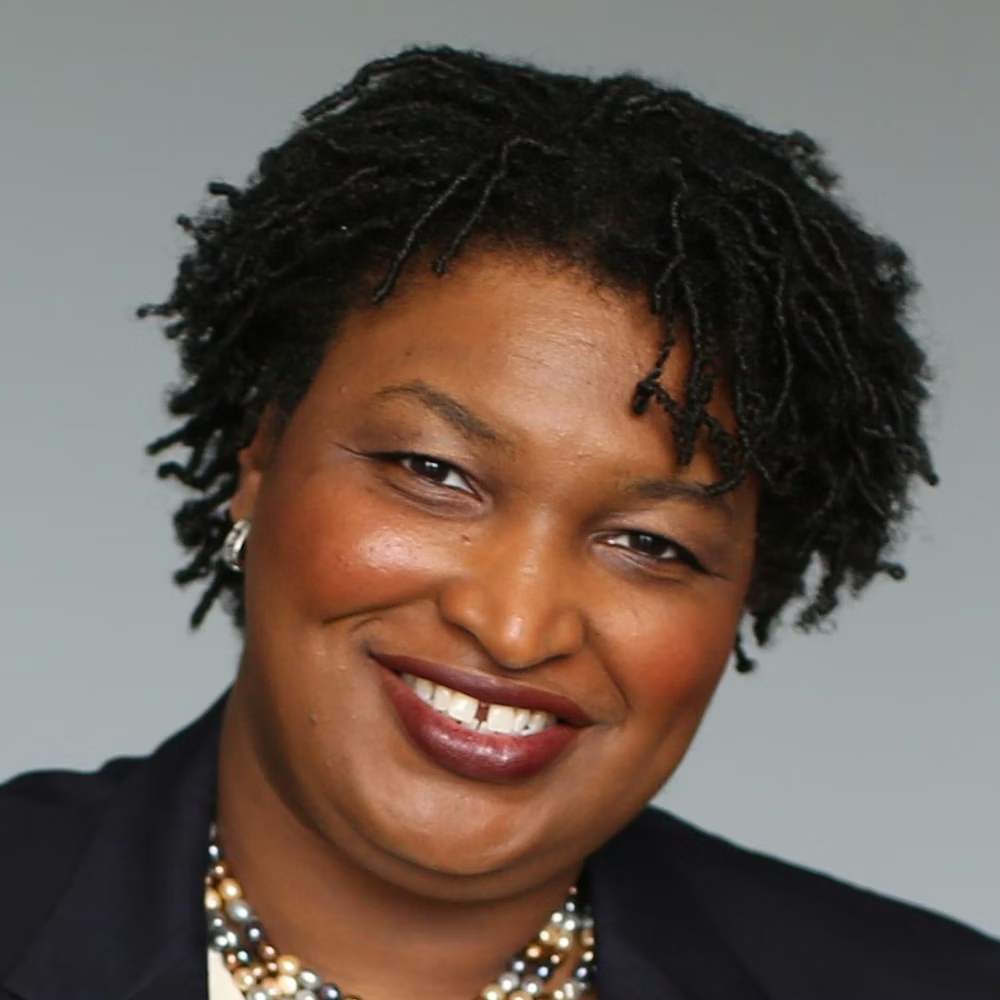
Stacey Abrams (1973 – Present)
Georgia House Minority Leader Stacey Abrams is the first African-American to lead in the House of Representatives. She has a reputation for working across party lines to improve education, affordability, and criminal justice. In 2018, she became the first African-American woman to in Georgia’s gubernatorial race. Despite not winning the election, she continues to be an influential voice in the party and politics in general.

Wilma Mankiller (1945 – 2010)
Wilma Mankiller was made aware of the subjugation of Native Americans early in her life when her family was forcibly relocated from their ancestral home to San Francisco. The 1969 takeover of Alcatraz by Native American activists inspired Mankiller to get involved in the cause. She moved back to Oklahoma, where she worked to improve access to housing and water for her small Cherokee community. She became the first woman to be elected to serve as Principal Chief of the Cherokee Nation in 1985.